Healthcare serial murder
The Good Nurse: A True Story of Medicine, Madness, and MurderHealthcare serial murder, as presented in the book, is patient killing concealed within the work of care: the perpetrator can approach vulnerable people, handle medicines, and appear to be carrying out ordinary clinical duties. Charles Cullen’s crimes make the pattern concrete, while the investigations reveal a second, institutional dimension. Patients were harmed inside systems designed to protect them, and the routine practices that enabled access also made suspicious acts difficult to distinguish from legitimate care.
Definition and Clinical Setting
The defining tension is between a nurse’s authorized access and the lethal use of that access. In one account at Saint Luke’s Hospital, Cullen injects digoxin through an existing IV port, an action that could pass as routine line care because nurses commonly use the port to flush a line. He then disposes of the vial and needle in the sharps container, returns to the nurses’ station, and later participates in the resuscitation as code leader. The clinical sequence gives the act its cover: the person who caused the crisis can also appear to be helping answer it.
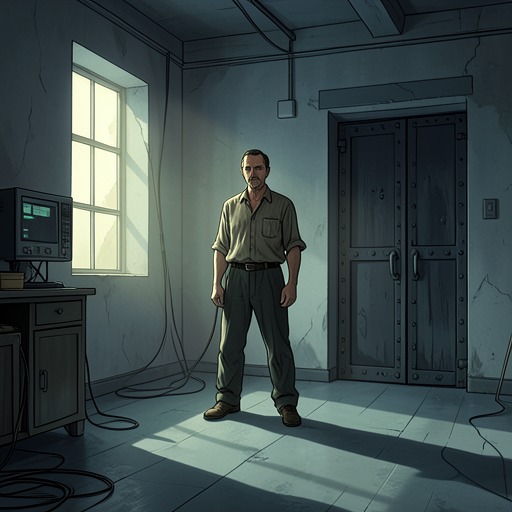
The setting matters without itself explaining the crime. Cullen prefers night shifts, when visitors and administrators are absent and the hospital’s public spaces are closed. He watches patient monitors, checks charts, and attends to familiar unit routines. He also occupies quiet or isolated spaces and positions himself near the corridor doors through which pharmacy deliveries arrive. In Amy Loughren’s later reconstruction, what had seemed like helpfulness—Cullen taking a delivery tote from a pharmacy runner and stocking the unit—could also give him access to medicines without using the Pyxis system. The same conduct could therefore read as conscientious work or as a means of avoiding a recorded medication transaction.
Methods, Routine, and Concealment
The book shows more than one route from access to harm. At Saint Luke’s, Cullen chooses between a direct approach and an indirect one. In the direct instance, he administers digoxin through an IV line and then remains present for the code. In another episode, he works alone in the medication room while apparently stocking supplies, alters IV preparations, and places them in named patient trays. Later, he is seen helping colleagues set up lines and responding to a code. These episodes differ in method, but share a concealment strategy rooted in tasks that belong to nursing work: preparing medicines, arranging supplies, and assisting patients and coworkers.
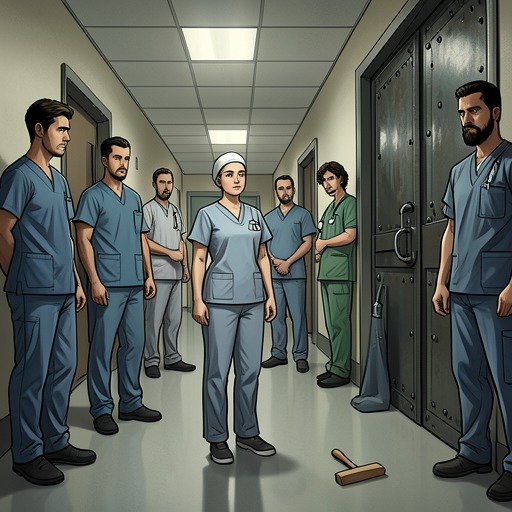
The drug itself could also be hard to recognize by sight. Digoxin was clear, like saline, in the account of the direct injection. At Saint Luke’s, an investigation into diverted medication uncovered prepared syringes of vecuronium, a powerful paralytic not prescribed to patients on the unit during the four-shift weekend described. Nurses watching the medical storage room saw staff enter for apparently ordinary reasons, including restocking; the observations did not immediately identify which visit mattered. Access controls and watchful colleagues were present, but the normal movement of staff through the medication room made those safeguards difficult to interpret as a coherent warning.
The Saint Barnabas Hospital insulin incidents show how a different route could leave physical and laboratory evidence. A bag associated with Fred Belf tested positive for insulin, and its exterior bore tiny needle punctures, including three along the edge—an unusual location for accidental punctures made while connecting a bag. Testing also found exceptionally high insulin levels in patients whose bodies had not produced the insulin themselves. Yet the records contained neither prescriptions nor nursing notations documenting administration. The combination made a simple charting mistake less persuasive, while the pattern of unexplained crashes across intensive, critical-care, and cardiac units suggested that the problem was not confined to one shift or ward.
Recognition and Investigation
Healthcare serial murder can emerge first as a collection of events that look like separate clinical emergencies. At Saint Barnabas, codes became frequent enough to overlap, and nurses sometimes left one emergency to attend another. The early information was anecdotal and confusing; the patients’ sudden insulin crises did not initially arrive as a single, clearly defined case. Investigators had to connect laboratory abnormalities, patient records, medication evidence, and staffing schedules before they could identify a possible common actor.
At Saint Luke’s, suspicion likewise developed through small discrepancies and recollections rather than a single immediate revelation. Loughren had objected to a new insulin adjustment form that required nurses to sign for estimated vial contents. She found the procedure unreliable and demanded to know why insulin was being treated with greater control, but her supervisor did not explain the underlying concern. Later, when investigators showed her a Pyxis printout from the night Reverend Gall died, the record changed what she could imagine about her friend. She could recognize that the transactions looked strange and terrible, yet still struggled to reconcile the evidence with her prior trust in Cullen.
Loughren’s role shows how recognition can depend on knowledge held by a colleague rather than on an instrument alone. Reviewing records, she realized that Cullen’s position near the hallway doors put him in the path of pharmacy deliveries and could let him obtain drugs without touching the Pyxis system. She also brought investigators information about Cerner patient records and worked to preserve and collect material for their inquiry. Her cooperation carried personal and professional risk: she feared for her job, felt isolated from coworkers, and had to decide whether to assist detectives investigating a friend. The records gained meaning through the combined work of clinical familiarity and police investigation.
Proof, Institutional Response, and Consequences
Suspicion and proof remain distinct in the book’s account. At Saint Luke’s, hospital chart reviews did not identify Cullen’s role in suspicious deaths. A later review by an outside physician also failed to lead the hospital to conclude that he had harmed patients. A forensic pathologist retained in work with the Pennsylvania State Police reviewed seventeen charts selected by the hospital, but was not given a written list of the diverted medications and apparently did not speak with nurses who had raised suspicions about Cullen. He could not conclude that Cullen had harmed anyone. These limitations illustrate why a suspected pattern can be difficult to establish retrospectively: the reviewer’s conclusions depend on which records and contextual information are available.
Cullen eventually confessed to killing, among others, five Saint Luke’s patients whose deaths were at issue in the cases described; the book states that seven patients have been specifically identified as killed by him at that hospital. The gap between early institutional reviews and the later account of his killings is central to the concept. A negative chart review did not resolve the underlying danger; it reflected the limits of what the review examined and how the information was assembled.
The difficulty of proof extended beyond hospital records. After Cullen’s arrest, forensic scientist Henry Lee described the challenge of identifying victims long after burial, recovering trace substances, and linking a death to a particular suspect. In this kind of investigation, the passage of time can weaken the physical evidence precisely when investigators are trying to reconstruct a pattern across multiple patients and institutions.
The aftermath also exposed disputes over responsibility. Lawsuits involving hospitals alleged that the fault lay with institutions that had previously employed Cullen and allowed him to move on, and named Saint Barnabas Hospital as the origin point. In a major dispute between Saint Luke’s Hospital and Somerset Medical Center, a judge sided with Somerset without deciding the merits of the underlying cases. The judge considered Saint Luke’s calls to other hospitals—warning some about Cullen while not alerting others—relevant to responsibility. The book’s account thus locates healthcare serial murder at the intersection of a perpetrator’s concealed acts and institutions’ uneven handling of warning signs, information, and accountability.